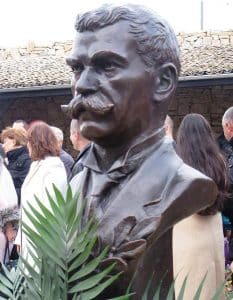
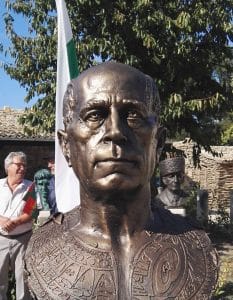
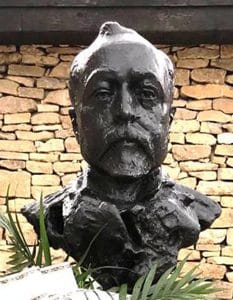
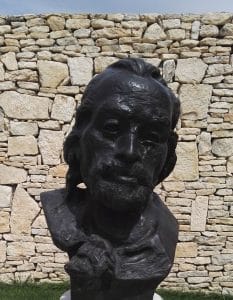
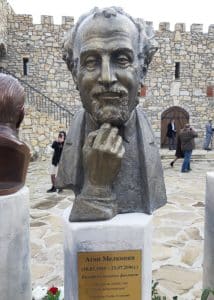
(15.09.1919 – 30.6.2002)

“Every task is like that: if you don’t put your heart into it, it won’t turn out right!” says one of the characters created by writer, playwright, screenwriter and publicist Nikolay Haytov.
His life began during the difficult years following the First World War and ended at the threshold of the new 21st century. During this time, three different political systems and sets of values succeeded one another, while Haytov’s characters inhabit a world of their own, where the past reluctantly gives way to the present.
Having grown up in the foothills of the Rhodope Mountains, the writer knew intimately the life of the mountains and their people, as well as their history – a world in which the “wild,” the primal and the free often clash with the conservative boundaries of family traditions and deeply rooted customs that are slow to change.
Haytov’s signature work is his collection “Wild Tales” (1967). Several of the stories were adapted into internationally acclaimed films, including “The Goat Horn,” “Manly Times,” “A Tree Without Roots,” and others. Haytov also wrote the screenplay for “Captain Petko Voivode” (1981), a production beloved by generations of Bulgarians, telling the story of the defender of the Rhodopes and his struggle for their liberation from Ottoman rule.
Haytov’s books have been translated into numerous languages, with a total circulation exceeding 4 million copies. In recognition of his contribution to the development of Bulgarian literature and culture, in 2000 he was awarded the Order of Stara Planina, First Class.
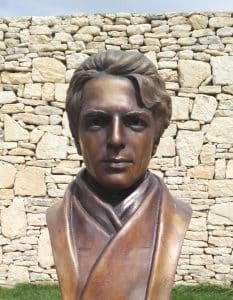
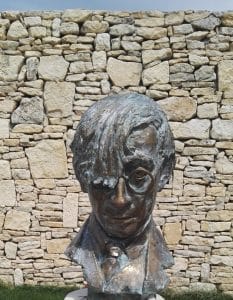
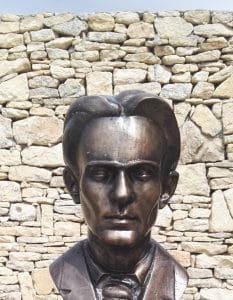
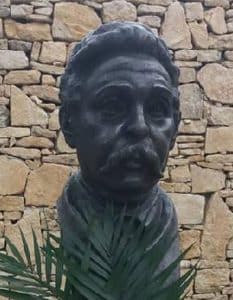
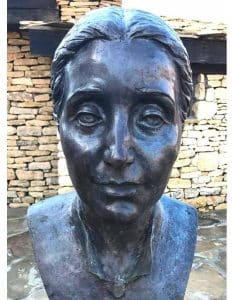
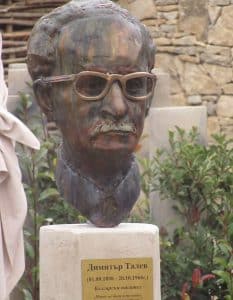
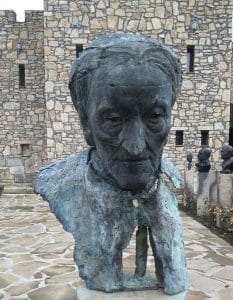
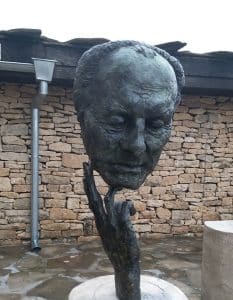
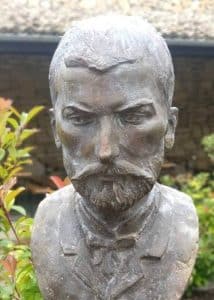
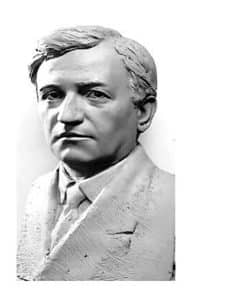
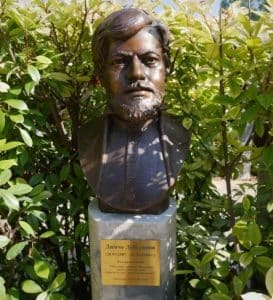
The bust-monument of Haytov was created by his son, Alexander Haytov, a student of Prof. Velichko Minekov and an unconventional artist. One of his earliest works as a graduate of the National Academy of Art was “My Father. Head,” which already demonstrated his distinctive approach to sculpture.
Today, his works are recognizable for their unexpected artistic solutions – the illuminated eyes of the statue of Tsar Samuel in Sofia; the “singing hoof” of the horse in the Monument to General Kolev in Dobrich, from which the old Bulgarian national anthem “Shumi Maritsa” can be heard; and the sculpture of Nikolay Haytov in the village of Gulyantsi, which appears almost to speak.
He is also the creator of the Monument to Dobri Voynikov in Shumen, the memorial to the victims of the bombing at Bunovo railway station, the Monument to Tsar Ivan Sratsimir in Vidin, and the sculptural composition depicting Haytov and one of his characters in front of the Drama Theatre in Smolyan.
The artist’s works can be found in the National Art Gallery and Sofia City Art Gallery, as well as in the art galleries of Plovdiv, Smolyan, Stara Zagora and Shumen, and in private collections in Bulgaria and abroad.